What it feels like
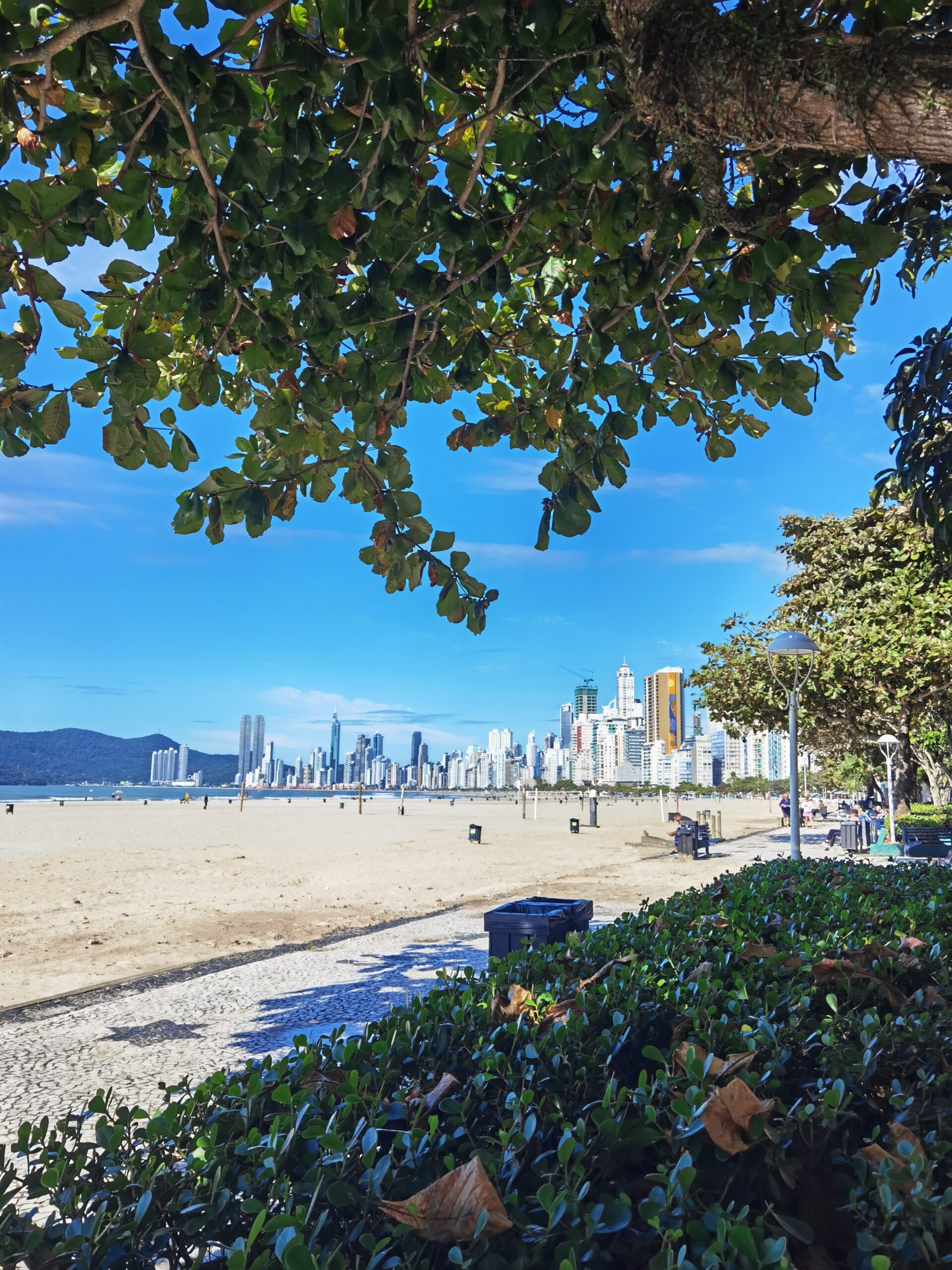
Centro is the heart of Balneário Camboriú. It is dense, lively and mostly made up of older buildings, with newer towers slotted in between.
Avenida Atlântica runs along Praia Central. Avenida Brasil, one block inland, is the main shopping street. Most of daily life is within walking distance, which is rare in Brazil and one of the main reasons people choose BC at all.
In summer it is busy and loud. Traffic is heavy and the beach fills up. Many visitors love exactly that. In winter the same streets are calm, and you will mostly share them with year-round residents.
For scale: the whole city had 139,155 residents at the 2022 census (IBGE), on a small strip of land between the hills and the sea. That is why it feels so built-up.
Where it is and how it connects
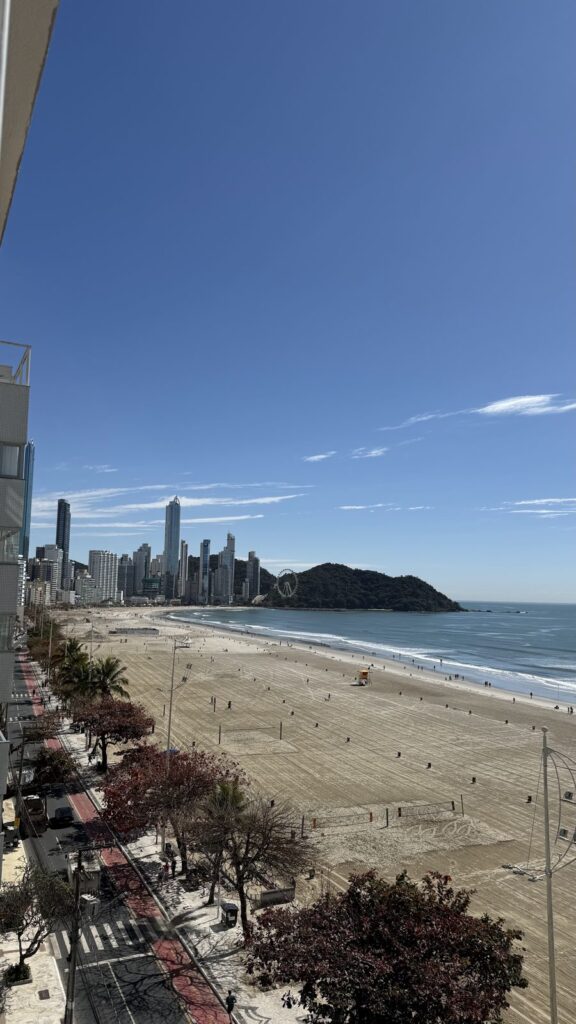
Centro is the middle stretch of Praia Central, between Pontal Norte to the north and Barra Sul to the south. Most cross streets have numbers instead of names (see below).
The BR-101 highway runs along the back of the city, roughly parallel to the beach. From Centro you reach it in a few minutes outside rush hour.
The closest airport is Navegantes (NVT), about 34 to 35 km by road, usually around 40 minutes by car without heavy traffic. It has domestic flights, mostly via São Paulo. Florianópolis (FLN) has more connections, including some international flights, and is about 87 to 94 km away, around 1 hour 15 to 1 hour 20 minutes on the BR-101. Most people arriving from abroad connect through São Paulo.
How street numbers work
In Centro the cross streets are numbered: Rua 1500, Rua 1501 and so on. Avenida Central is the starting point. Even numbers start from Avenida Central and run south; odd numbers also start from Avenida Central and run north.
So Rua 1500 is on the opposite side of Avenida Central from Rua 1501, not next to it. When you look at an address, the last digit tells you which side of Avenida Central it is on.
The beach
Praia Central is an urban beach. A wide promenade and a bike path run its full length.
In 2021 the city widened the sand: the beach went from roughly 25 metres to around 70 metres wide (Folha de S.Paulo). Before that, the towers shaded much of the sand in the afternoon. They still do in places, but there is much more room.
The water inside the bay is usually calm, with small waves. It suits swimming and children far better than the open beaches to the north and south.
Water quality is the honest weak point. The state environment agency IMA-SC tests Praia Central at several points. In its report of 15 September 2026, three Centro-area points (in front of Rua 4000, Rua 4900, and between Rua 1300 and 1400) were rated unfit for bathing (“impróprio”), while the others were fit. Results change week by week, often after heavy rain. Check the current report at balneabilidade.ima.sc.gov.br before you swim. People who want cleaner, quieter water often drive to Praia dos Amores or the Interpraias beaches.
Day-to-day life
This is the most practical part of the city to live in without a car. Supermarkets, pharmacies, bakeries, gyms, banks and clinics are on almost every block of Avenida Brasil and the streets around it. Angeloni, a large Santa Catarina supermarket chain, has a store at 4ª Avenida 880 in Centro.
The city’s public hospital is the Hospital Municipal Ruth Cardoso, on Rua Angelina in the Bairro dos Municípios, a short drive inland. It is open 24 hours. The private Hospital Unimed Litoral is on Avenida do Estado 1550. Most foreigners use private health insurance; Brazil’s public system (SUS) also treats legal residents.
For families, bilingual private schools in the city include Maple Bear (a Canadian programme) in the Bairro dos Estados and Colégio CECS. We do not know of a full international school with a foreign diploma in BC itself.
Food and nightlife
Centro has the most restaurants and bars in town, from simple per-kilo lunch places to steak houses and sushi. Avenida Atlântica is lined with kiosks and terraces, and Avenida Brasil is busy until late in summer.
Most of the city’s nightlife is in and around Centro and Barra Sul. Expect music late into the night on summer weekends, especially near the beachfront.
Housing
Most buildings in Centro are towers from the 1970s to the 2000s, often with smaller units and fewer amenities than new projects. Newer, taller towers are scattered through it, especially on the seafront.
The difference between seafront (“frente mar”), one block back (“quadra mar”) and the back streets is large, both in price and in light and noise.
For reference, the FipeZap index put the average asking price for homes in Balneário Camboriú at R$ 15,369 per square metre in September 2026, the second highest in Brazil. That is a city-wide average across all types. A high-end agency, Pharos, reported a median asking price of R$ 22,470 per m² for the Centro listings in its portfolio in October 2026. Seafront units are usually well above both figures.
The seasons
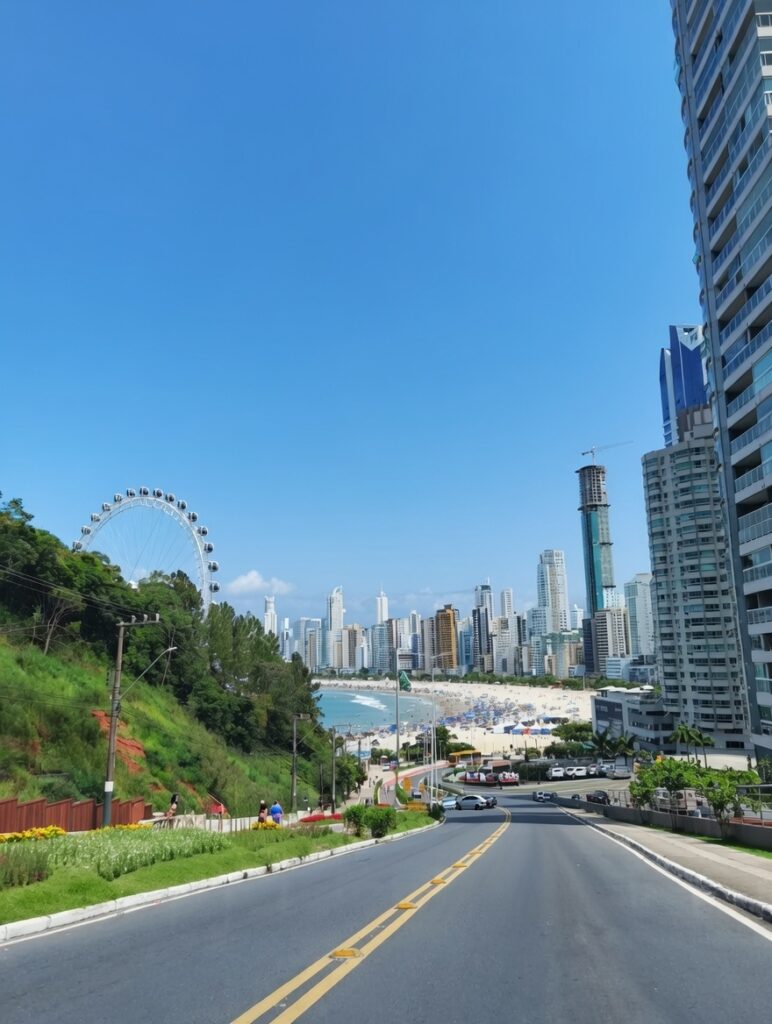
The high season runs from about December to February. The city expected 1.5 to 2 million visitors in the 2025/26 summer. At New Year (Réveillon) more than a million people watched the fireworks on Praia Central, according to the city. Traffic, parking and restaurant queues all get much worse at that time.
From March to November Centro is far quieter. Some seasonal businesses close, but most of daily life carries on as normal.
Safety
We have not found crime statistics broken down by neighbourhood that we trust. The state public security office (SSP-SC) publishes city-level data. Use normal big-city care, especially with phones on the beach in summer.
Living here
Centro suits people who want everything close: shops, restaurants, pharmacies and nightlife.
It is also the area most visitors look for first. That is why many owners here rent out their apartments in season. If you buy in Centro, expect neighbours who change every week in January.
The downsides are noise, crowds in summer, older buildings and the water quality at some points of the beach. The upside is that you may never need a car.
Pros and cons
Pros: Everything within walking distance; Calm water inside the bay; Easy to rent out in season; Widest choice of shops, restaurants and services.
Cons: Noise and crowds in summer; Many older buildings; Some beach test points often rated unfit for bathing; Heavy traffic and hard parking.
Buying from abroad: the basics
Foreigners can buy urban property in Brazil in their own name. You will need a CPF, the Brazilian tax number, which you can request through a Brazilian consulate before you travel.
Before signing anything, have an independent local lawyer check the property’s registration (the matrícula at the Cartório de Registro de Imóveis), any debts on it, and, for off-plan purchases, the developer’s registration of the project (the incorporação).
On purchase you pay a transfer tax (ITBI) to the municipality, here Balneário Camboriú, plus notary and registry fees. After that there is an annual property tax (IPTU) and, in a condo, a monthly condo fee. Ask for the current figures for the specific property, as they vary.
Money sent from abroad should go through a bank or authorised exchange channel, and be documented, so it can be sent back later.