What it feels like
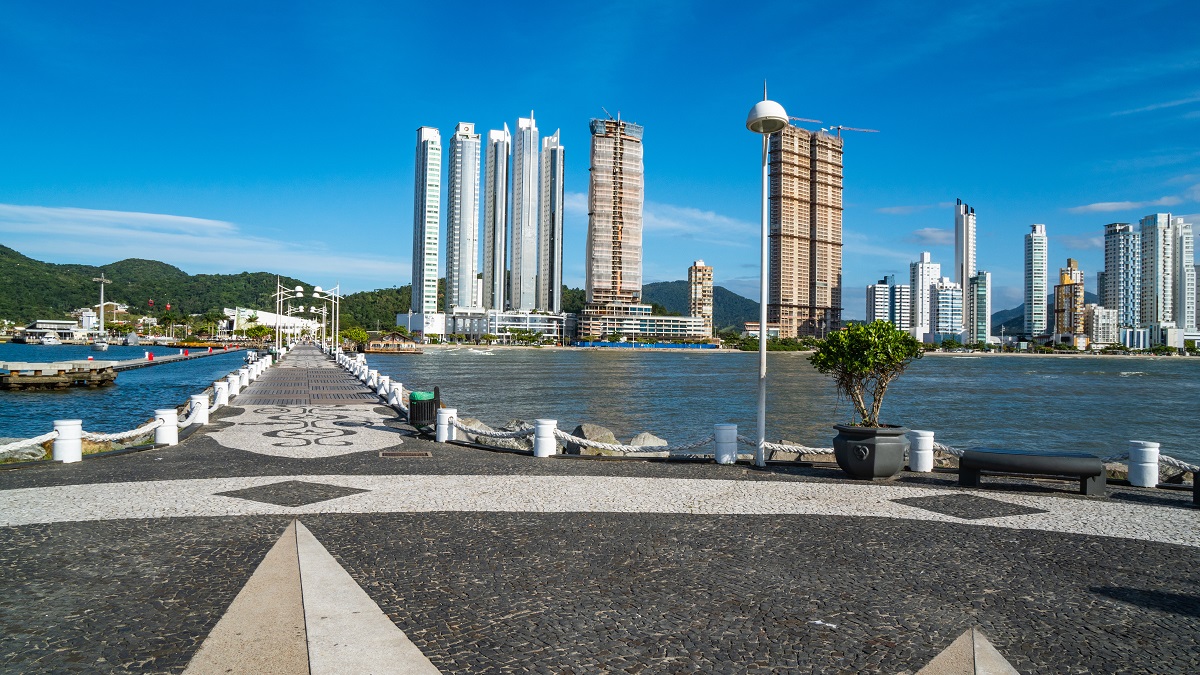
The south tip of BC is a narrow strip between the Camboriú river and the ocean. Some buildings on the river side have their own marinas.
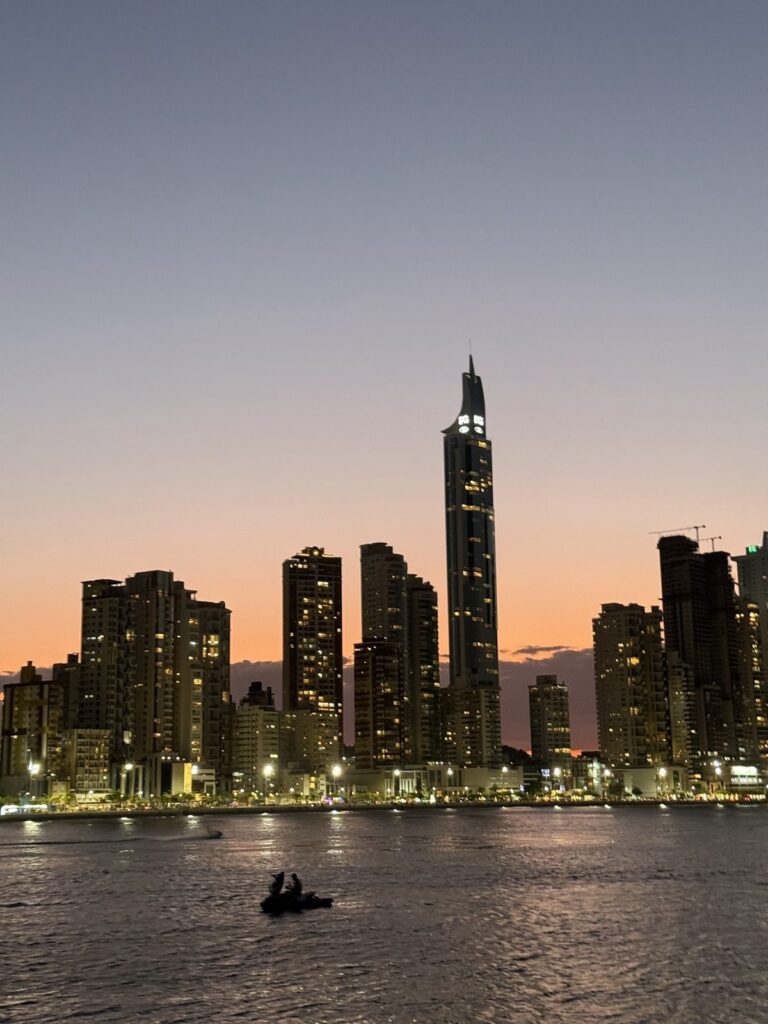
Many of the newest and tallest towers are here, including some of the tallest residential buildings in Latin America. There is a good choice of restaurants.
It feels more polished than Centro. Streets are a little calmer, but it is still very much the city.
Where it is and how it connects
Barra Sul is the southern end of Praia Central, by the mouth of the Camboriú river. Centro starts just to the north. The numbered cross streets on this side of Avenida Central have even numbers (see How street numbers work in our Centro guide).
The BR-101 is a short drive inland. Navegantes airport (NVT) is about 35 km away by road, typically around 40 minutes or more depending on traffic, since you cross the whole city first. Florianópolis airport (FLN) is about 87 to 94 km south, roughly 1 hour 15 to 1 hour 20 minutes.
The Avenida Interpraias, the coastal road to the southern beaches, starts here. So does the Unipraias cable car.
The beach
The beach at this end is usually less crowded than in Centro. After the 2021 widening the sand is much broader than it used to be (it went from around 25 to around 70 metres wide along Praia Central, per Folha de S.Paulo).
The newer beachside walk starts here. At the very end is the Molhe da Barra Sul, a breakwater of about 450 metres that you can walk out on for a view back along the whole beach.
Water inside the bay is generally calm. Water quality varies along Praia Central. In the IMA-SC report of 15 September 2026, the test point at Rua 4900 (near the southern end) was rated unfit for bathing, while points further north were fit. Check the latest report at balneabilidade.ima.sc.gov.br.
What is nearby
The Unipraias cable car leaves from its Barra Sul station. It climbs to a station on the forested hill (Mata Atlântica) and then down to Laranjeiras beach.
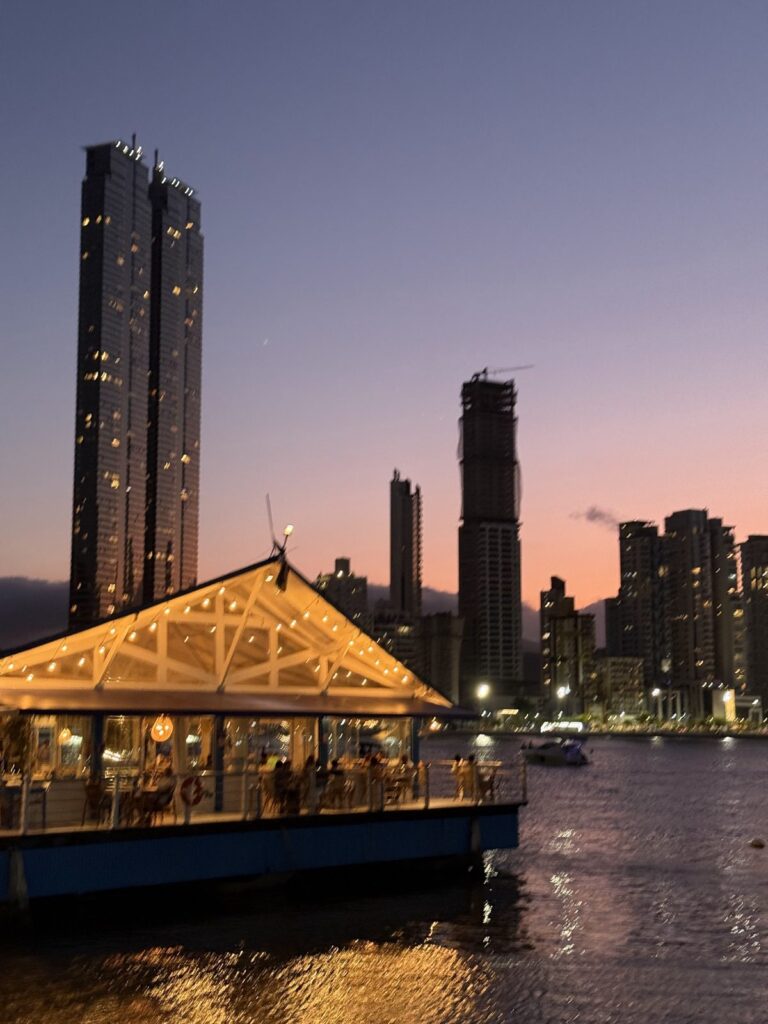
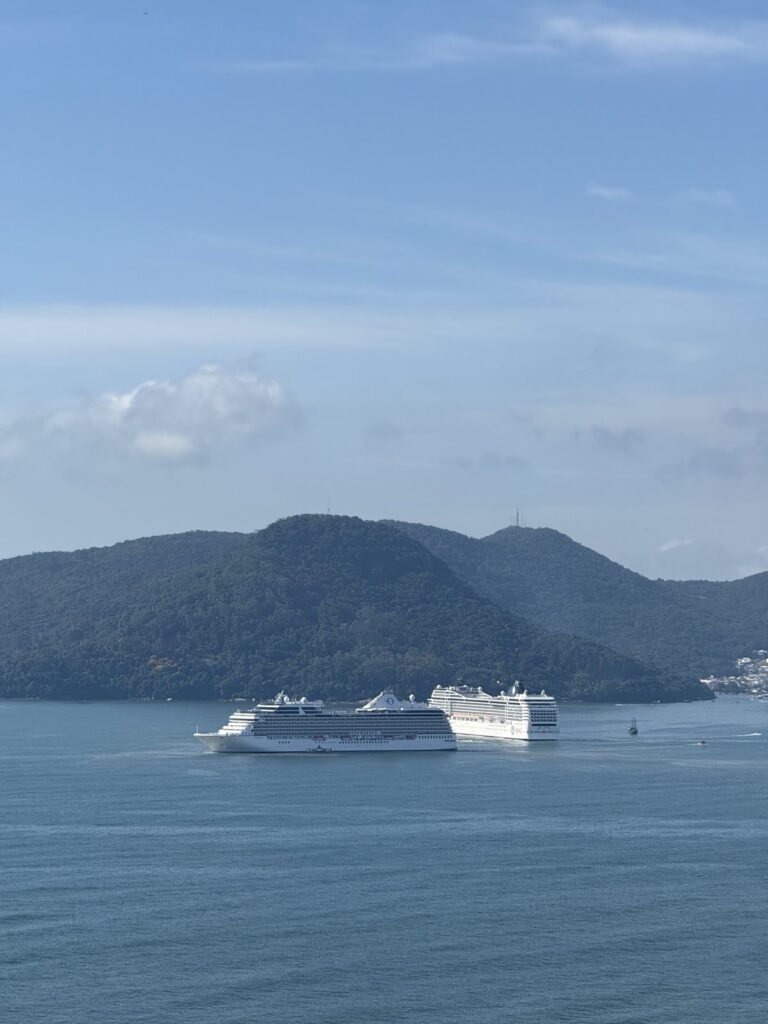
The river side has marinas and boat moorings, and in season cruise ships anchor in the bay.
Centro, with all its shops, is a walk or short ride north.
Day-to-day life
Supermarkets, pharmacies and gyms are within easy reach, though there are fewer on the narrow strip itself than in Centro. For a big shop, most people drive to the larger supermarkets on Avenida do Estado, such as Angeloni (Avenida do Estado 2440).
The public Hospital Municipal Ruth Cardoso (Rua Angelina, Bairro dos Municípios) and the private Hospital Unimed Litoral (Avenida do Estado 1550) are both a short drive away.
Bilingual schools in the city include Maple Bear (Bairro dos Estados) and Colégio CECS.
Food and nightlife
Barra Sul has a good choice of restaurants, many in new buildings along the seafront and the river. Bars stay busy late on summer weekends, and Centro’s nightlife is a short ride away.
Housing
This is the most sought-after address for new, high-end apartments. Units are often large, with several suites, private parking spaces and full leisure floors.
Prices reflect that. A high-end agency, Pharos, reported a median asking price of R$ 41,322 per m² for the Barra Sul listings in its portfolio in October 2026, the highest of the areas it tracks. The FipeZap city-wide average was R$ 15,369 per m² in September 2026. The gap tells you how far above the city average new seafront towers sit.
Many buildings here are recent or still under construction. When buying off-plan, check the developer’s track record and the delivery dates carefully.
The seasons
From December to February Barra Sul is busy, though usually less so on the beach than Centro. New Year (Réveillon) brings more than a million people to Praia Central for the fireworks (city estimate for 2025/26), and the roads around the south end clog.
The rest of the year is calm.
Safety
We have not found neighbourhood-level crime statistics we trust. City-level data is published by the state public security office (SSP-SC).
Living here
Barra Sul suits people who like a modern setting and want the city close by.
It is the most sought-after address for new, high-end apartments.
The trade-offs are price, some construction noise, and summer crowds. For many buyers from abroad, the new buildings, views and services make up for it.
Pros and cons
Pros: Newest, tallest towers with full amenities; Calmer stretch of Praia Central; Cable car, marinas and the Interpraias road on the doorstep; Restaurants close by.
Cons: Highest prices in the city; Construction work nearby; Summer traffic at the south end; Fewer everyday shops on the strip itself.
Buying from abroad: the basics
Foreigners can buy urban property in Brazil in their own name. You will need a CPF, the Brazilian tax number, which you can request through a Brazilian consulate before you travel.
Before signing anything, have an independent local lawyer check the property’s registration (the matrícula at the Cartório de Registro de Imóveis), any debts on it, and, for off-plan purchases, the developer’s registration of the project (the incorporação).
On purchase you pay a transfer tax (ITBI) to the municipality, here Balneário Camboriú, plus notary and registry fees. After that there is an annual property tax (IPTU) and, in a condo, a monthly condo fee. Ask for the current figures for the specific property, as they vary.
Money sent from abroad should go through a bank or authorised exchange channel, and be documented, so it can be sent back later.