What it feels like
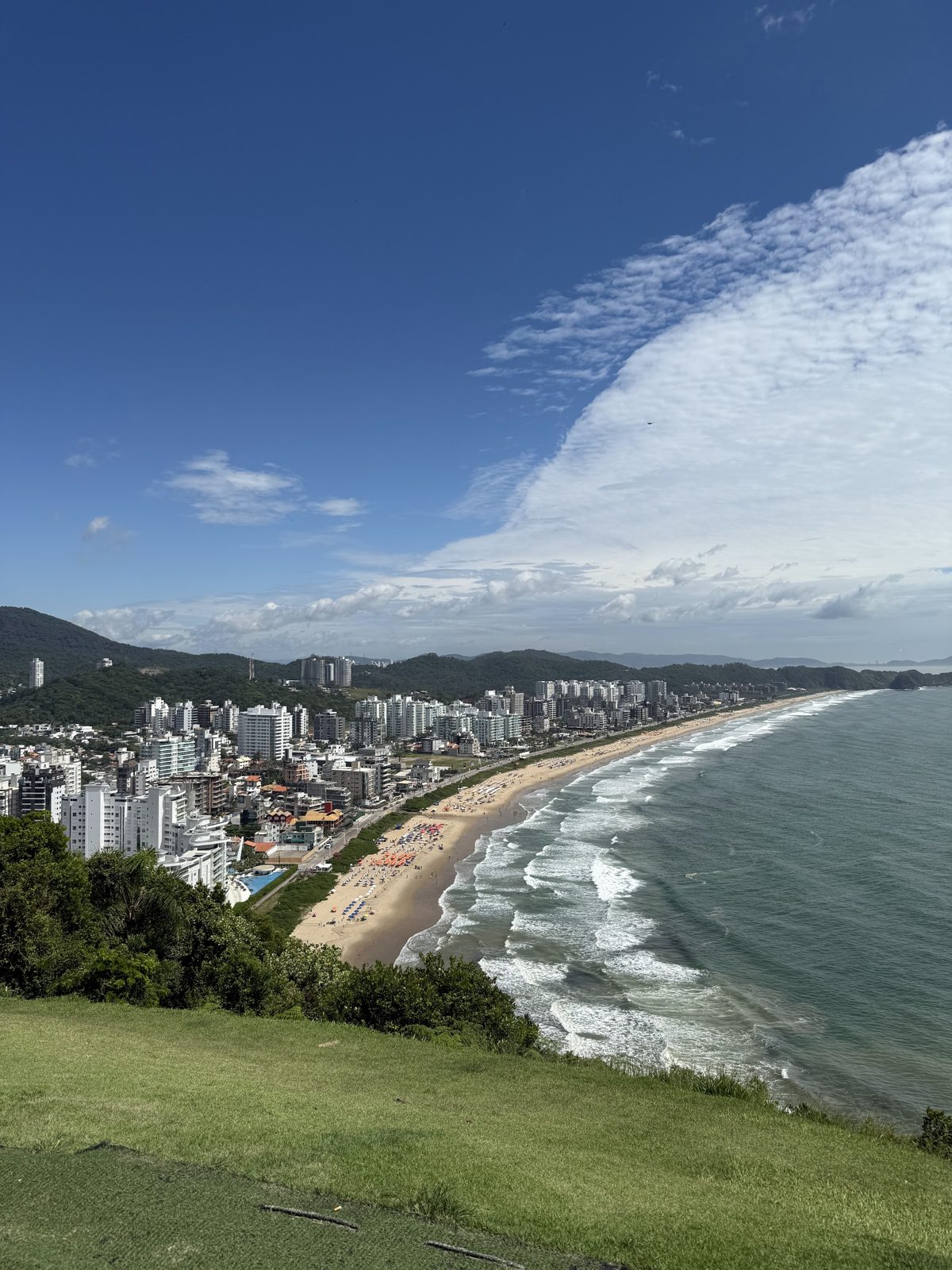
Praia Brava lies just north of BC, past Praia dos Amores. Technically it is in the municipality of Itajaí.
It is the newest part of the coast. It is being developed to high standards, with large luxury condos and lower buildings than in BC.
The focus is on beach life more than city life. There are good beach clubs and restaurants.
Where it is and how it connects
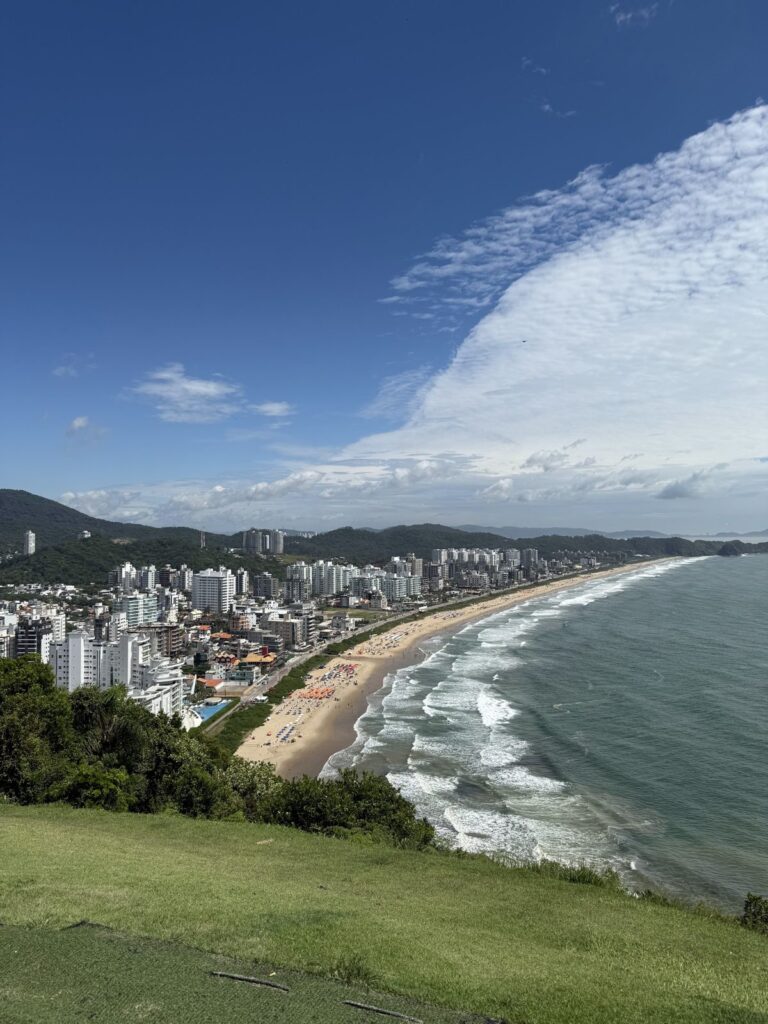
Brava runs north from Praia dos Amores for about three kilometres of beach, with green hills behind it. It is in Itajaí, a port city with the largest GDP in Santa Catarina; Itajaí’s centre is roughly 7 km away.
Navegantes airport (NVT) is close, just across the Itajaí river, often around 30 minutes depending on route and traffic. Florianópolis airport (FLN) is roughly 1 hour 15 to 1 hour 30 minutes south on the BR-101.
The beach
The beach is long and open, about three kilometres of sand backed by restinga (coastal scrub) and green hills.
It is open sea with strong waves. It is one of the main surf beaches in the region and hosts surf competitions. Swim where there are lifeguards, and pick calm days with small children.
IMA-SC tests the water at several points along Praia Brava. Check the current results at balneabilidade.ima.sc.gov.br.
What is being built
Brava is where some of the most ambitious projects on this coast are going up. Valor Econômico reported in September 2025 that new seafront launches here were asking between R$ 45,000 and R$ 55,000 per m², with some deals starting above R$ 100,000 per m².
The best-known is Tempo, a group of seven residential buildings and a hotel tower in Brava Norte. It is designed by the British architects Foster + Partners, their first residential project in Brazil. The developer is Müze. Ground works started in September 2026; the developer has announced completion for 2030 (hotel) and 2031 (homes).
The hotel will be run by Emiliano, the Brazilian luxury hotel brand from São Paulo and Rio de Janeiro. It is announced with 47 suites and will be the brand’s third hotel.
Already finished is Brava Home Resort, a large condominium on Rua Delfim Mário de Pádua Peixoto. It is known for its private artificial beach and big leisure areas.
Housing
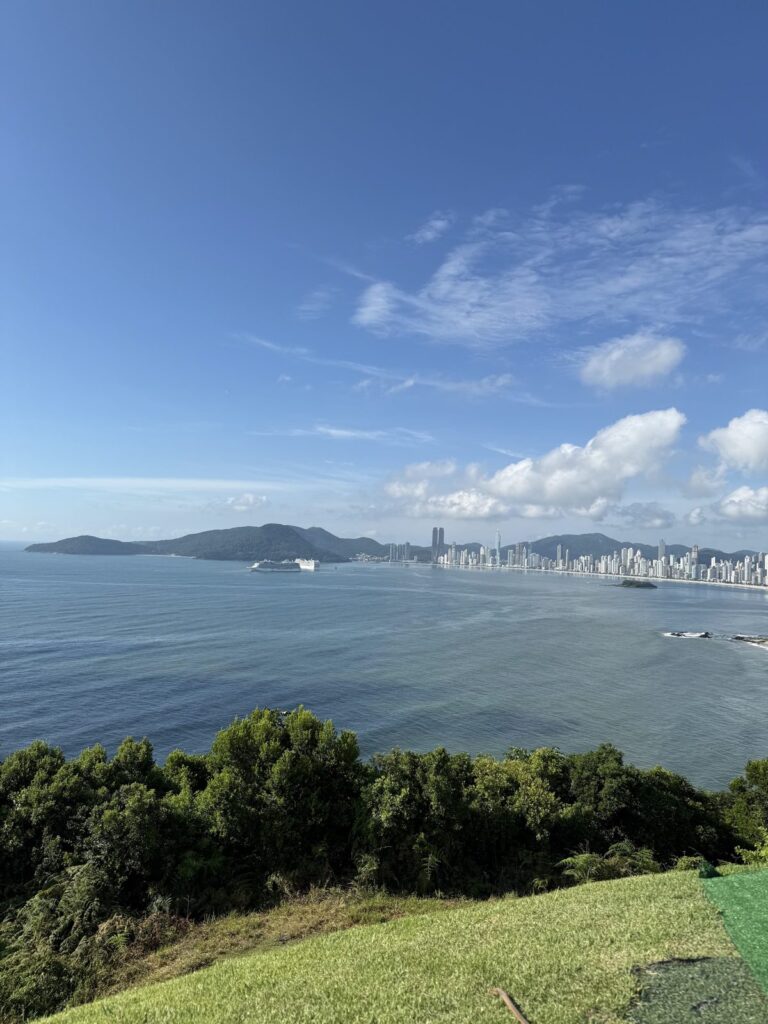
Most of the stock is recent: large condo buildings, often with resort-style leisure areas, plus some houses and low buildings on the hills. Units are generally large.
For reference, the FipeZap average for Itajaí as a whole was R$ 13,453 per m² in September 2026, but Brava is the city’s most expensive area by far. A high-end agency, Pharos, reported a median asking price of R$ 33,625 per m² for the Praia Brava listings in its portfolio in October 2026. Frontline seafront projects ask much more (see above).
Much of Brava is still under construction, so expect building work nearby for some years.
Day-to-day life
Brava has its own supermarkets, pharmacies, gyms, cafés and a small shopping centre, and the offer keeps growing with each new building. For specialist medical care, the main options are in BC (Hospital Unimed Litoral on Avenida do Estado 1550, and the public Hospital Municipal Ruth Cardoso) and in Itajaí.
Bilingual schools in BC, such as Maple Bear and Colégio CECS, are a drive away.
Eating out
There are good beach clubs and restaurants along the beach road. A newer arrival is Fazenda Churrascada, a big churrasco (barbecue) restaurant from São Paulo, on Avenida Osvaldo Reis 2557. It is open all day and has a large play area for children.
Brava is also known for its nightlife in summer, from beach clubs to larger dance clubs.
Getting around
In summer it can take a while to get to Centro. Our own rough estimate is 15 to 30 minutes, depending on traffic.
If you do not need to go into town every day, that is rarely a problem. Itajaí and Navegantes airport are also close.
The seasons
Summer is the busy time. Beach clubs fill up, parking gets hard and the roads back up, especially on weekends and around New Year. In winter Brava is quiet, and some beach businesses reduce their hours.
Safety
We have not found neighbourhood-level crime statistics we trust. Itajaí publishes city-level data through the state public security office (SSP-SC).
Living here
Praia Brava suits people who want a new home near a good beach, and who are happy to drive into the city.
It suits surfers, families who want space and resort-style condos, and buyers who value newer construction.
It suits less well people who want to walk everywhere, or who dislike living next to building sites. Note too that property here is under Itajaí’s rules and taxes, not Balneário Camboriú’s.
Pros and cons
Pros: Newest, highest-standard developments; Long, open surf beach; Beach clubs and restaurants; Close to Navegantes airport.
Cons: Very high prices for frontline projects; Lots of construction; A drive to Centro, slow in summer; Rough sea for small children.
Buying from abroad: the basics
Foreigners can buy urban property in Brazil in their own name. You will need a CPF, the Brazilian tax number, which you can request through a Brazilian consulate before you travel.
Before signing anything, have an independent local lawyer check the property’s registration (the matrícula at the Cartório de Registro de Imóveis), any debts on it, and, for off-plan purchases, the developer’s registration of the project (the incorporação).
On purchase you pay a transfer tax (ITBI) to the municipality, here Itajaí, plus notary and registry fees. After that there is an annual property tax (IPTU) and, in a condo, a monthly condo fee. Ask for the current figures for the specific property, as they vary.
Money sent from abroad should go through a bank or authorised exchange channel, and be documented, so it can be sent back later.