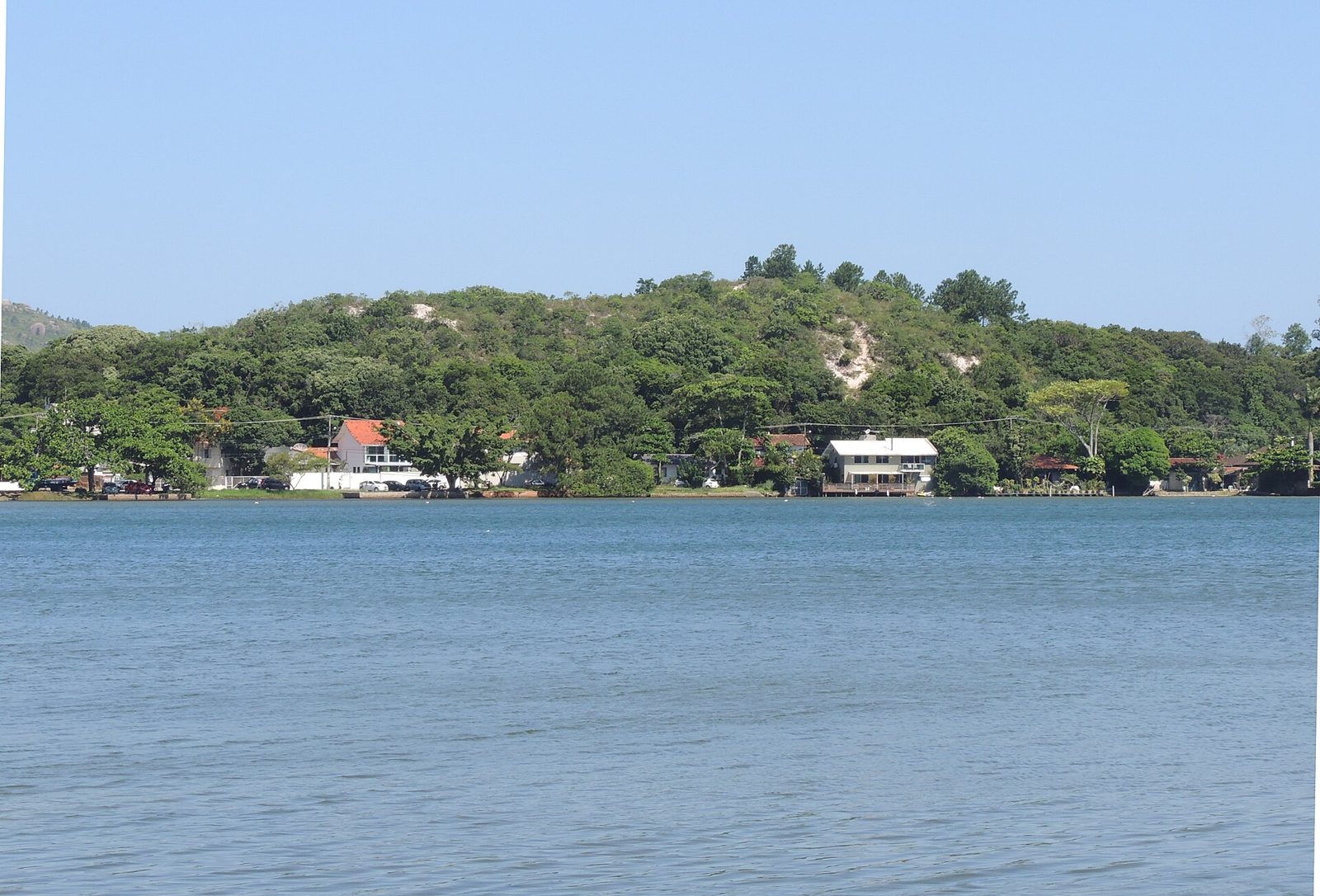
What it feels like
Florianópolis is the capital of Santa Catarina, and most of it sits on an island. It is a much bigger place than Balneário Camboriú: the IBGE census counted 537,211 people in 2022, against 139,155 in BC.
It does not feel like one city. There is a working capital in the Centro, with government offices, the university and the old market, and then a ring of beach districts around the island, each with its own character. Some are upmarket and planned, some are old fishing villages, some are surf towns.
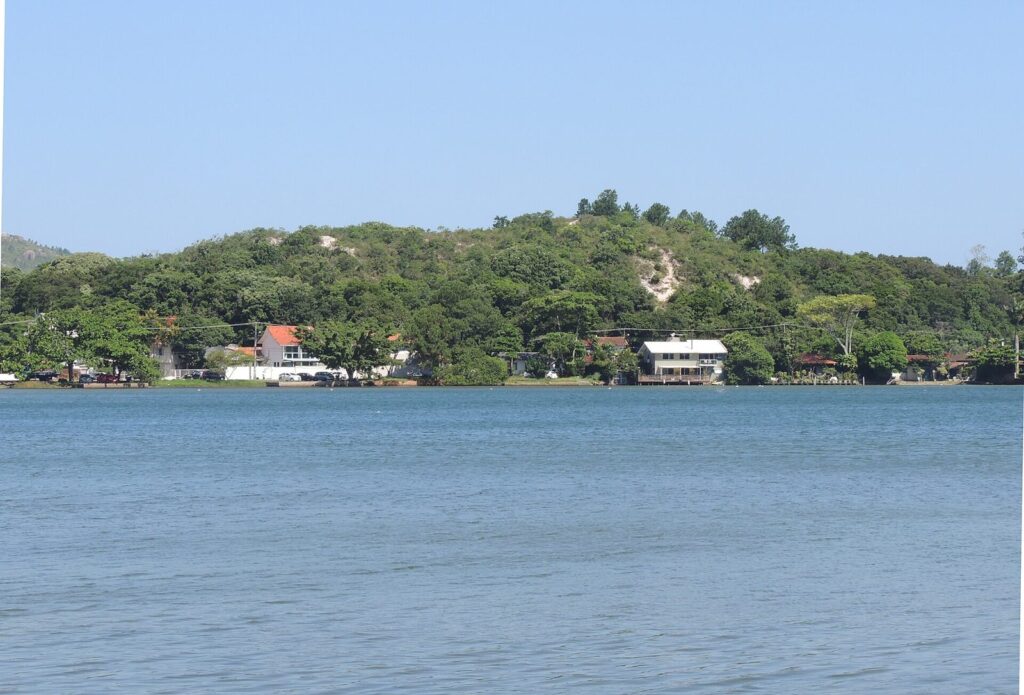
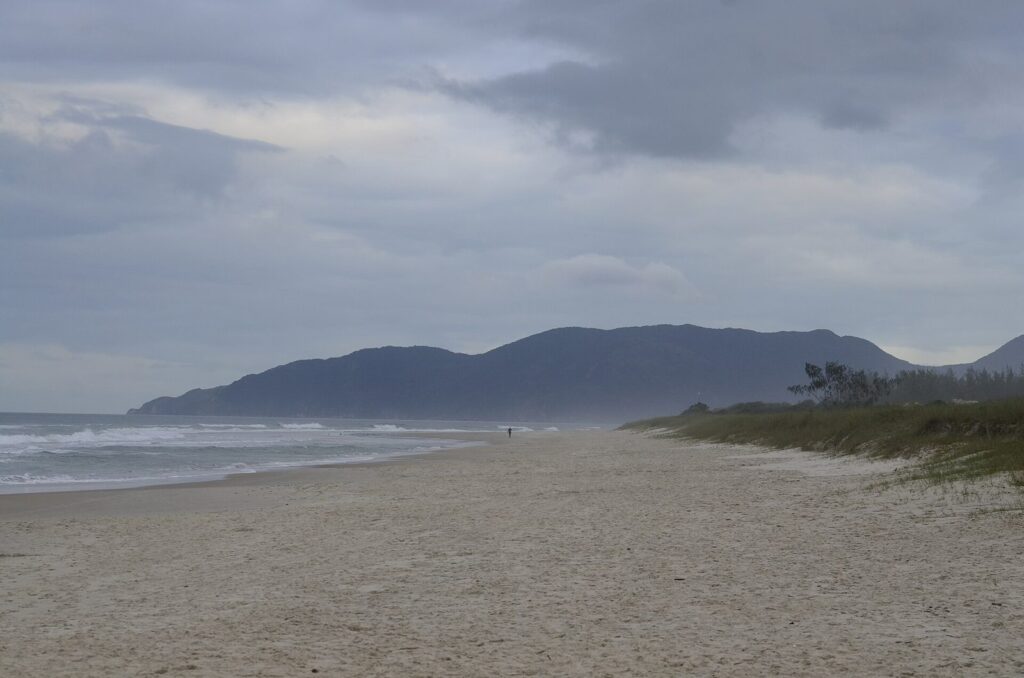
What it lacks is BC’s wall of towers on one beach. Buildings on most of the island are lower and more spread out, and there is a lot of green: hills, dunes, lagoons and protected areas.

Where it is and how it connects
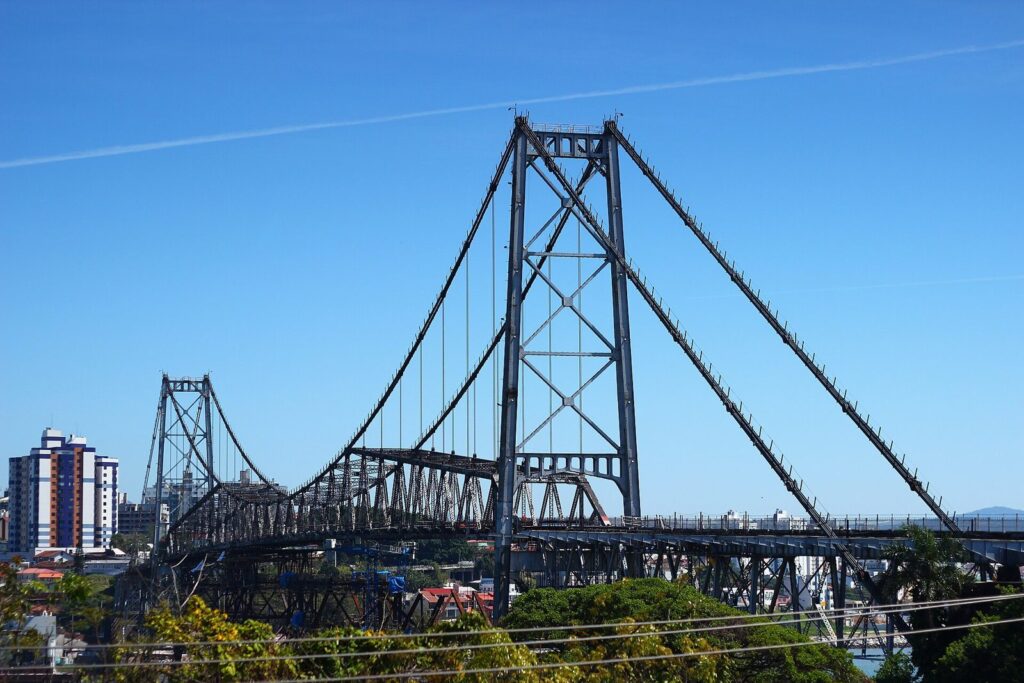
The city is roughly 80 km south of BC on the BR-101. The island is joined to the mainland by three bridges: the Colombo Salles, the Pedro Ivo Campos and the Hercílio Luz suspension bridge, the city’s best-known image, which reopened in 2019 after a long restoration.
Florianópolis airport (FLN), run by Zurich Airport Brasil, is in the south of the island. It has direct international flights to Buenos Aires, Santiago, Montevideo, Asunción, Lima and Panama City, plus seasonal flights to Córdoba, and since July 2026 a TAP flight to Lisbon four times a week. Exame reported that FLN has been the third Brazilian airport for international traffic since 2024. For many people abroad, that is the strongest reason to look at Florianópolis.

The main districts
Centro is the old capital on the bay, facing the mainland. It has the Mercado Público, the cathedral, offices, courts and older apartment blocks. It is practical rather than a beach address.
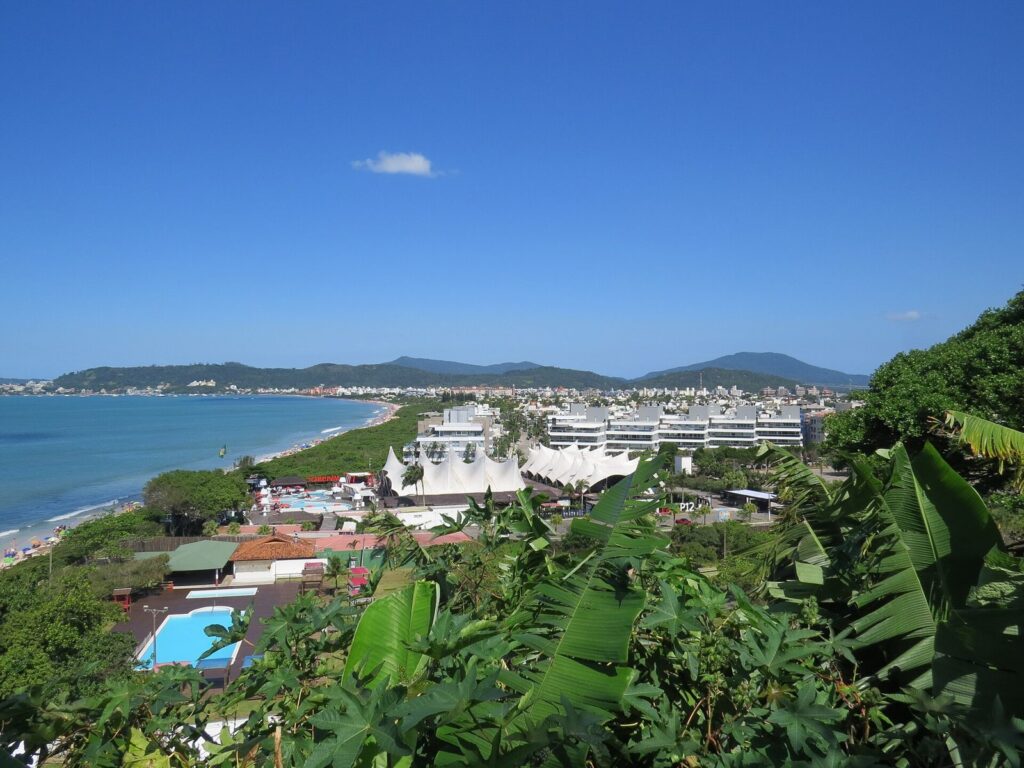
Jurerê Internacional, in the north of the island, is a planned, upmarket neighbourhood of large houses and low condos by a calm beach. It is known for its beach clubs in summer. It is one of the most expensive parts of the island, and it is far from the Centro.
Lagoa da Conceição, in the middle of the east side, is built around a large lagoon. It has cafés, bars and restaurants, and is popular for water sports and with a younger crowd. Traffic on its narrow roads is heavy in summer.
Campeche, on the east coast south of the Lagoa, has a long open surf beach. It has grown fast and attracts families and people who work in tech. The sea can be strong, and the roads in and out get congested.
Santo Antônio de Lisboa, on the north-west side, is an old Azorean village on the Baía Norte, known for its sunsets and seafood restaurants. Further south, Ribeirão da Ilha is the main oyster-farming area.

The tech hub
Florianópolis has a large technology sector for a city of its size. The state tech association ACATE reports sector revenue of about R$ 12.8 billion, around a quarter of the city’s GDP, and the city calls itself the “national capital of startups”. In practice, that means more English speakers, more coworking spaces and more international residents than in most Brazilian cities of its size.
Housing
The FipeZap average for Florianópolis was R$ 13,607 per m² in September 2026, below Balneário Camboriú (R$ 15,369, the second highest in Brazil). That is an average for the whole city. Prices vary a lot between districts, and Jurerê Internacional and some beachfront areas ask far more.
The stock is mixed: apartments in the Centro and on the mainland side, houses and low condos in most beach districts, and gated communities in the north. Much of the island is protected or has building limits, which keeps supply tight in the most popular areas.
Day-to-day life
As a state capital, Florianópolis has the services you would expect. Private hospitals include Hospital Baía Sul and the Imperial Hospital de Caridade, and the Hospital Universitário of the federal university (UFSC) is a large public hospital. International families can look at schools such as Dual International School, an IB World School, and the Escola Internacional de Florianópolis.
Shopping, supermarkets and restaurants are spread across the island. Where you live decides how far you drive for them.

Getting around
This is the main drawback. The island’s roads are few and narrow, and most people drive. The bridges and the main roads back up at peak hours, and in summer some beach districts become very slow to reach. Choose where you live around where you work and where your children go to school.
The seasons
Summer (December to February) is the busy season, with large numbers of visitors and heavy traffic. Winter is mild by European standards but can be damp and windy. Because Florianópolis is a working capital, it stays a living city all year, which is less true of the smaller beach towns.
How it compares with Balneário Camboriú
Lifestyle. BC is compact: one beach, one skyline, almost everything within a short walk or drive. Florianópolis is spread out over many districts, each with its own beach and pace. You trade BC’s convenience for more variety and more nature.
Climate and altitude. Both are at sea level on the same coast, with a similar humid subtropical climate. We have not seen data showing a meaningful difference for daily life.
Seasons. Both get very busy in summer. Florianópolis has a larger year-round population, so it feels less empty in winter than the BC seafront.
Cost of housing. FipeZap, September 2026: Florianópolis R$ 13,607 per m², BC R$ 15,369 per m². The best districts in both cities ask well above their averages.
Infrastructure. Florianópolis has more of everything: university, government, tech companies, international schools. BC has better roads for its size and a much shorter commute between home, beach and shops.
Healthcare. Both have private hospitals. As the state capital, Florianópolis has the larger hospitals and more specialist care.
Airports and drive times. FLN is on the island, often 20 to 40 minutes from home depending on the district and traffic (our estimate). Navegantes (NVT) is roughly 110 to 120 km north, around 1 hour 30 minutes or more (our estimate). From BC, FLN is about 87 to 94 km, 1 hour 15 to 1 hour 20 minutes, and NVT about 35 km, around 40 minutes.
Choose Florianópolis over BC if you want direct flights to Europe and South America, a larger city with a university and a tech scene, or a quieter, greener beach district rather than a skyline.
Choose BC over Florianópolis if you want to walk to everything, live in a new high-rise by the beach, or avoid bridge and island traffic.
Living here
Florianópolis suits people who work remotely or in tech, families who need an international school, and people who fly abroad often. It suits less well people who dislike driving or who want one compact, walkable centre by the beach.
Pros and cons
Pros: International airport with direct flights to Lisbon and South America; Many different beaches and districts; Large tech and university community; State-capital hospitals and schools.
Cons: Traffic, especially on the bridges and in summer; Spread out, so you drive a lot; Top districts are very expensive; Building limits keep supply tight.
Buying from abroad: the basics
Foreigners can buy urban property in Brazil in their own name. You will need a CPF, the Brazilian tax number, which you can request through a Brazilian consulate before you travel.
Before signing anything, have an independent local lawyer check the property’s registration (the matrícula at the Cartório de Registro de Imóveis), any debts on it, and, for off-plan purchases, the developer’s registration of the project (the incorporação). On the island, also ask whether the plot is affected by environmental protection rules or is federal coastal land (terreno de marinha), which carries its own annual fees.
On purchase you pay a transfer tax (ITBI) to the municipality, plus notary and registry fees. After that there is an annual property tax (IPTU) and, in a condo, a monthly condo fee. Ask for the current figures for the specific property, as they vary.
Money sent from abroad should go through a bank or authorised exchange channel, and be documented, so it can be sent back later.