What it feels like
Urubici is a small mountain town in the Serra Catarinense, the high plateau of Santa Catarina. The town sits at about 915 m above sea level, and the IBGE census counted 10,834 people in 2022.
It is the opposite of Balneário Camboriú. There is no sea, no towers and no nightlife to speak of. Instead there are canyons, waterfalls, araucaria pines, cold winters and long views. Most visitors come for the landscape and the cold, and many stay in pousadas and cabins in the countryside around the town.
The local economy is farming (vegetables and apples) and tourism.
.jpg)
Where it is and how it connects
Urubici is about 170 km inland, south-west of Florianópolis. The usual route is the BR-282 inland to Bom Retiro, then the SC-110 to Urubici, roughly 3 hours to 3 hours 15 minutes in total. The SC-110 climbs through curves and can have fog, so plan to drive in daylight.
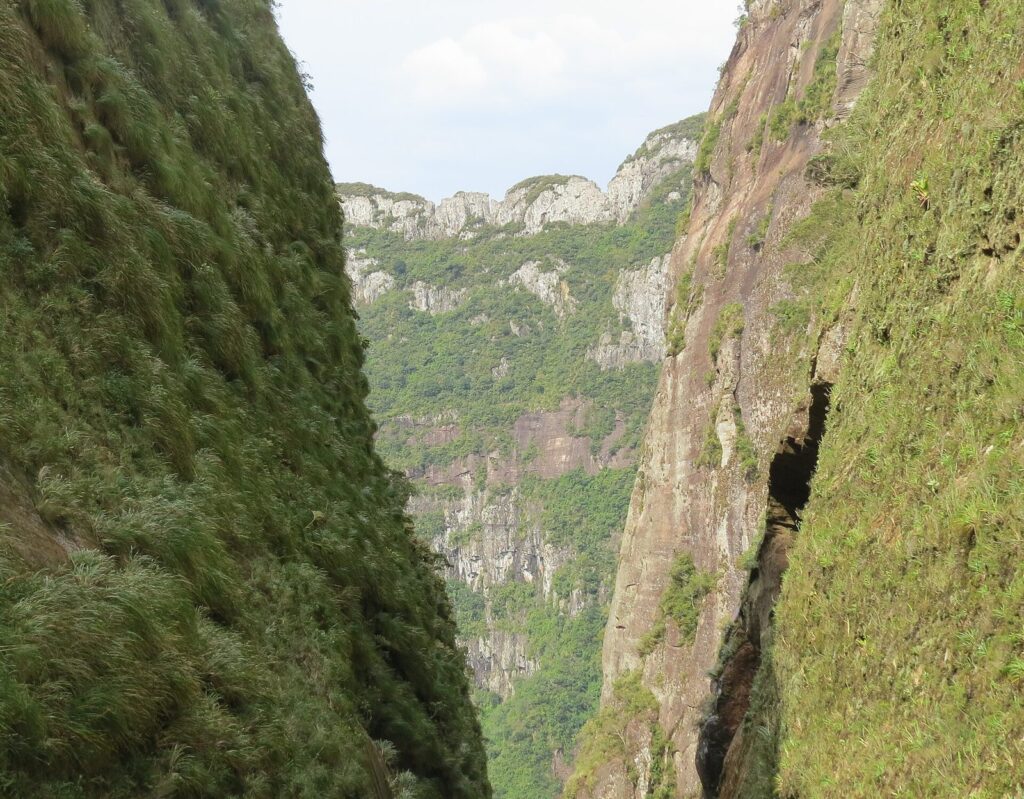
There is another way down to the coast, the SC-370 through the Serra do Corvo Branco, a dramatic cut through the cliffs with very tight bends. It is not suitable for large vehicles.
Florianópolis is where most people from the coast come from, and where you go for the airport (FLN), the largest hospitals and big shopping. The nearer regional centre for everyday services is Lages, according to the IBGE.

The landscape
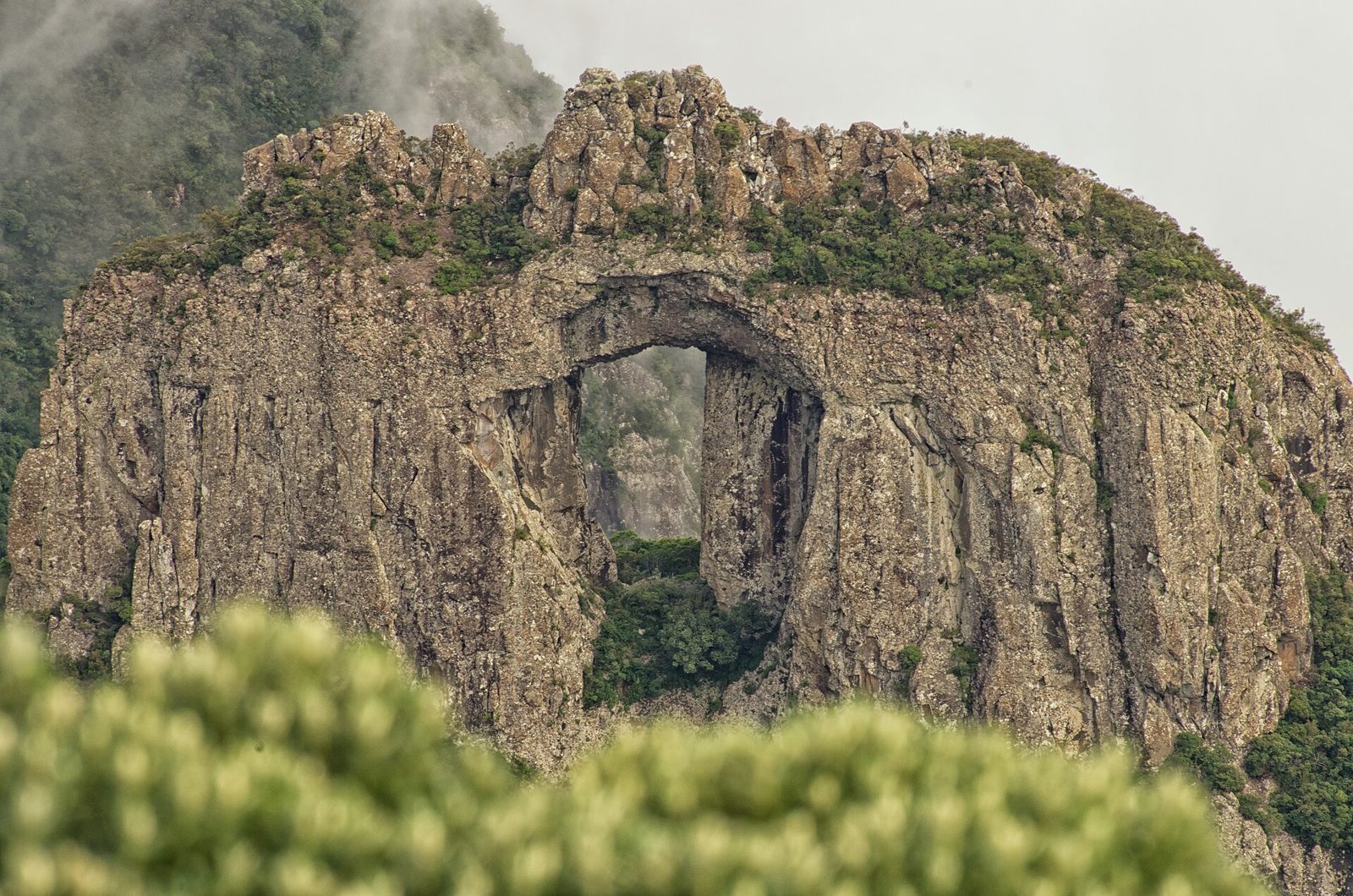
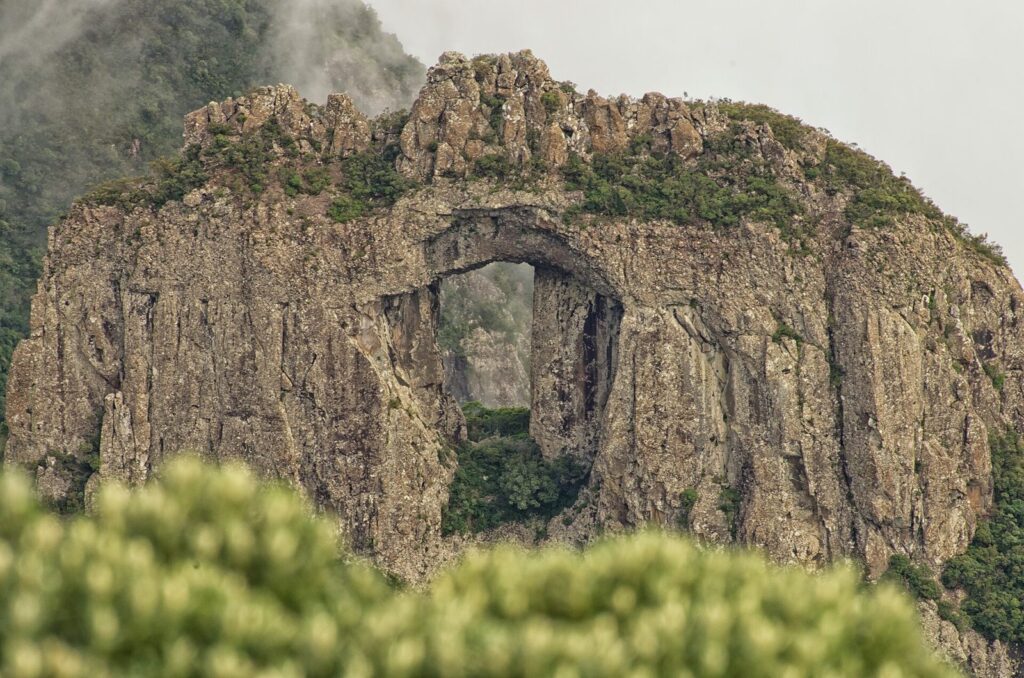
The best-known sights are on the edge of the São Joaquim National Park. Morro da Igreja, at 1,822 m, is often described as the highest inhabited point in southern Brazil, and from its viewpoint you see the Pedra Furada, a rock arch in the cliff. Access to the top is controlled, so check the current rules with the park (ICMBio) before you go.
Other sights include the Cascata do Avencal, a waterfall of over 100 m, the Serra do Corvo Branco viewpoints and the rural roads of the Caminho das Neves. There is good walking, and many of the rural roads are scenic drives.
Altitude wine nearby
The Serra Catarinense is one of Brazil’s newer wine regions, known for its vinhos de altitude (altitude wines). One of the best-known producers is Vinícola Thera. It is not in Urubici itself but in the neighbouring municipality of Bom Retiro, on the SC-110 at km 355, the road you take to Urubici from Florianópolis. The winery puts it about 35 km, or 40 to 50 minutes, from Urubici.
According to the winery, its vineyards are at about 900 m and cover 26 hectares. It makes around 150,000 bottles a year across some 20 labels (sparkling, white, rosé and red) and has won more than 60 national and international awards, including medals at the Decanter World Wine Awards 2024. In February 2024 it opened a new 3,000 m² building with production, three tasting rooms and the Thera Wine Bar, which serves a six-course paired menu.
Thera is part of the Fazenda Bom Retiro, an 800-hectare estate owned by the Freitas family, with a boutique hotel, the Pousada Trinca Ferro, a shop and the wine bar. Guided vineyard visits with a tasting run every day from 10:00 to 17:00. In October 2026 the four-wine Degustação Clássicos was listed at R$ 185. Book ahead for weekends and holidays. Visits are not open to children under 16 or to pets.
An emerging second-home area
The Fazenda Bom Retiro also has a gated community, the Residencial Fazenda Bom Retiro. It was launched in February 2024 as the first condominium inside a winery in Brazil, with 83 plots of about 2,000 m², a club house, pools and sports courts. Its website now markets “Private Residences” in two collections, Casas do Bosque and Casas do Lago, and lists plots from R$ 2 million and three-suite house projects from R$ 4 million (checked October 2026). These are the developer’s own asking prices; we have not verified sales or how much has been built.
It is part of a wider trend. In 2026 the builders’ association Sinduscon Grande Florianópolis counted 603 units for sale in 15 projects across São Joaquim, Urubici, Rancho Queimado and Bom Jardim da Serra. It described the Serra as moving from a winter destination to “an alternative for living, leisure and investment”. Valor Econômico reported in December 2025 that wine tourism is bringing high-end property projects to the region. Our own view is that many of the buyers are people escaping traffic, including the bridge and beach queues of Florianópolis, who want somewhere quiet for long weekends and the winter. At three hours from the capital, the Serra works better as a second home than for a daily commute.
Not every project is legal. In 2024, at the request of the state prosecutors (MPSC), a court stopped works, licences and lot sales at three rural condominiums in Urubici, on the grounds that they were urban-style developments on rural land. In September 2023 the MPSC had already recommended revoking parts of the 2022 municipal law that allowed them. Before you buy in any condominium in the Serra, have a lawyer confirm that it is properly registered and licensed.
Climate and cold
This is one of the coldest parts of Brazil. Winter nights can drop below freezing, frost is frequent on the high ground, and there is occasional snow. The state weather service, Epagri/Ciram, recorded snow in Urubici on 29 May 2025, among other towns in the Serra.
You will often read that Morro da Igreja reached −17.8 °C on 29 June 1996. That figure is unofficial, and later official INMET measurements have not come close to it, so treat it with caution.
Summers are mild and fresher than on the coast. Fog is common on the mountain roads.
Housing
Urubici is not covered by the FipeZap index, and we have not found a reliable, dated average price per m². Most properties are houses in town, rural plots and small farms, and cabins built for tourism.
If you look outside the town, check whether the land is urban or rural. Rural property has its own rules, and extra ones for foreign buyers (see below).
Day-to-day life
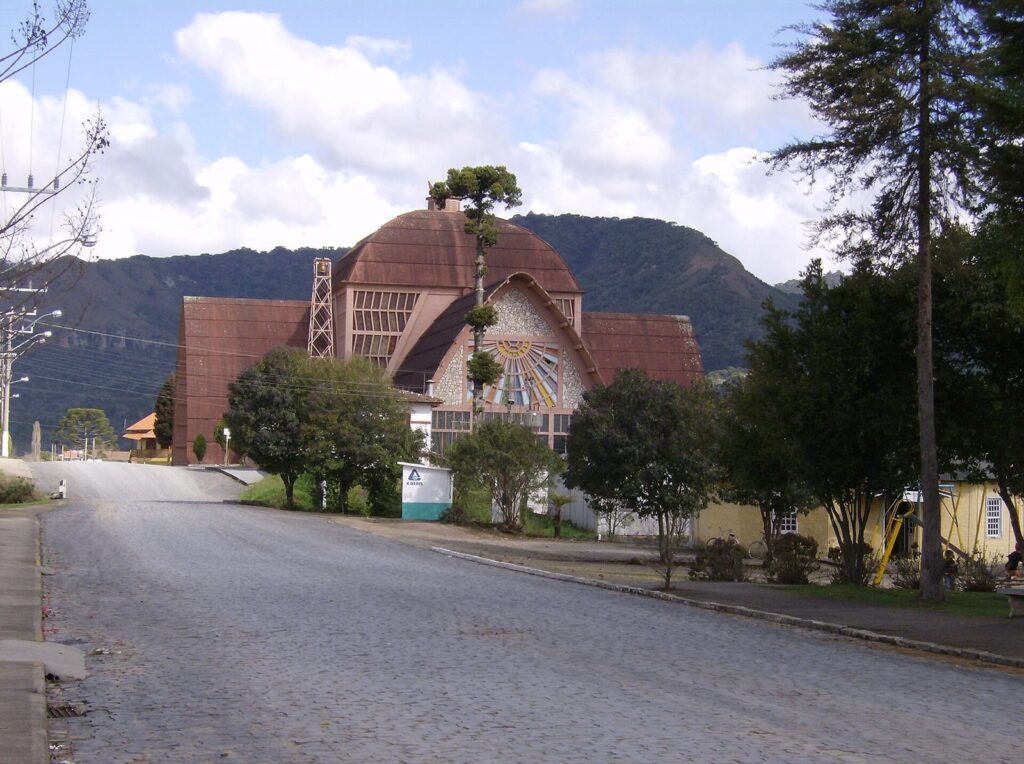
The town has the basics: supermarkets, pharmacies, restaurants, banks and the services of a small municipality. The Hospital São José, in the town centre, offers 24-hour care. For specialist care and larger hospitals, people go to Lages or to Florianópolis.
There are no international schools. Shopping beyond the basics means a trip to Lages or the coast.

Getting around
You need a car, and in winter it helps to be comfortable driving on wet, foggy mountain roads. Many sights are on rural roads, some unpaved.
The seasons
Winter (June to August) is the high season, when people come for the cold, the frost and the chance of snow. Holidays and long weekends get busy. The rest of the year is quieter.
How it compares with Balneário Camboriú
Lifestyle. BC is a beach city with a busy seafront and a full city around it. Urubici is a quiet mountain town for people who want nature, space and a slower life.
Climate and altitude. BC is at sea level with mild winters. Urubici is at about 915 m, with cold winters, frost and occasional snow, and cooler summers.
Seasons. BC peaks in summer. Urubici peaks in winter.
Cost of housing. BC averaged R$ 15,369 per m² in September 2026 (FipeZap). There is no FipeZap figure for Urubici, so we cannot compare like for like. The type of property, houses and land rather than apartments, is also very different.
Infrastructure. BC has the services of a mid-sized city. Urubici has the basics of a small town, and the nearest larger city is Lages.
Healthcare. BC has private and public hospitals. Urubici has a small local hospital; specialist care is in Lages or Florianópolis.
Airports and drive times. From Urubici, FLN is roughly 3 hours 15 minutes or more (our estimate, based on the 3 hours to 3 hours 15 minutes to central Florianópolis). NVT is roughly 4 hours (our estimate). From BC, FLN is about 87 to 94 km (1 hour 15 to 1 hour 20) and NVT about 35 km (around 40 minutes). Urubici itself is roughly 250 km from BC, around 4 hours (our estimate).
Choose Urubici over BC if you want mountains, cold winters, privacy and land, and you do not need the sea or city services.
Choose BC over Urubici if you want the beach, an airport within an hour, hospitals and schools close by, and a lively city.
Some people do both: a home on the coast and a cabin in the Serra for winter weekends.
Living here
Urubici suits people who love the outdoors and cold weather, who work remotely with a reliable connection, or who want a second home in the mountains. It suits less well people who need frequent flights, specialist healthcare or schools for children with an international curriculum.
Pros and cons
Pros: Some of the most dramatic landscapes in southern Brazil; Real winters, with frost and occasional snow; Quiet and spacious; Farming and nature all around.
Cons: About three hours from Florianópolis by mountain road; Small-town services; Specialist healthcare is far away; Fog and winding roads.
Buying from abroad: the basics
Foreigners can buy urban property in Brazil in their own name. You will need a CPF, the Brazilian tax number, which you can request through a Brazilian consulate before you travel.
Rural property is different. Purchases of rural land by foreigners are restricted by federal law (Law 5,709 of 1971) and can need approval from INCRA, depending on the size and the buyer. If the plot is outside the urban area, take specialist legal advice before you commit.
Before signing anything, have an independent local lawyer check the property’s registration (the matrícula at the Cartório de Registro de Imóveis), any debts on it, and any environmental restrictions, which are common near the national park.
On purchase you pay a transfer tax (ITBI) to the municipality, plus notary and registry fees. After that there is an annual property tax (IPTU) for urban property, or the federal rural land tax (ITR) for rural land. Ask for the current figures for the specific property.
Money sent from abroad should go through a bank or authorised exchange channel, and be documented, so it can be sent back later.